Three Sisters Seed Collection | Native American Farming
Three Sisters Seed Collection | Native American Farming
Couldn't load pickup availability
Share
CLASSIFICATION: Polyculture System ORIGIN: Indigenous North America COMPONENTS: Zea mays | Phaseolus vulgaris | Cucurbita pepo ROLE: Self-Sustaining Agronomy
Modern agriculture relies on chemistry; ancient agriculture relied on engineering. The "Three Sisters" method is a masterclass in the latter.
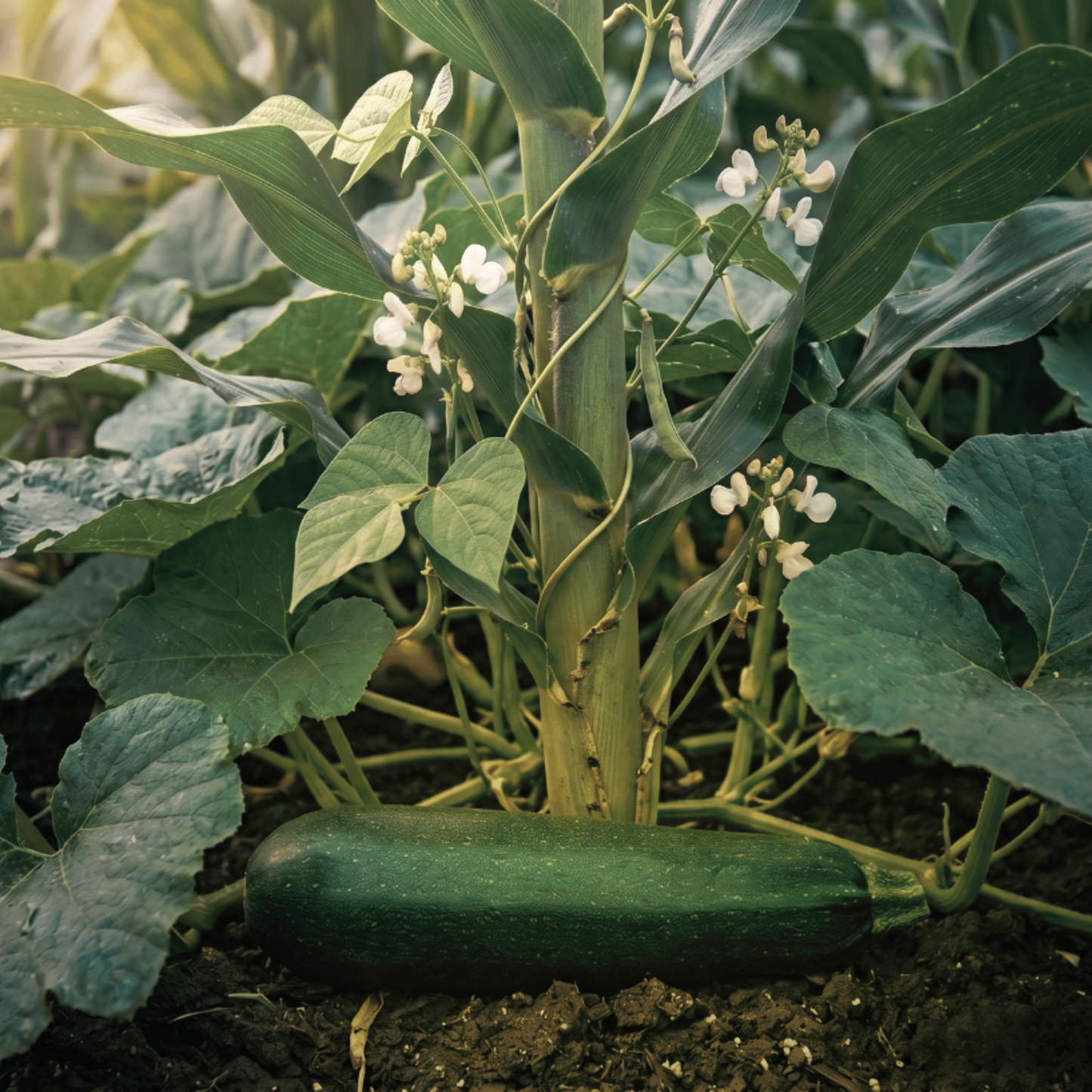
This is not merely a collection of seeds; it is a blueprint for a self-regulating biological machine. By interplanting corn, beans, and squash in a specific geometry, you create a system where every weakness is covered by a neighbor's strength. It is the only garden bed that builds its own trellis, manufactures its own fertilizer, and deploys its own weed control.
It is elegant, ruthless, and historically proven. It turns a patch of dirt into a closed-loop ecosystem.
________________________________________
THE CURATOR'S NOTES
- The Architect (Corn): We include 'Bodacious' Sweet Corn. It is the scaffolding. Its role is to grow tall and rigid, providing the vertical structure required for the system to rise.
- The Chemist (Bean): We include 'Blue Lake' Pole Beans. They do not merely climb; they pay rent. As nitrogen-fixers, they pull nutrients from the air and deposit them into the soil, feeding the hungry corn.
- The Guardian (Squash): We include 'Dark Green' Zucchini. Its broad, prickly leaves act as a living mulch. They shade the soil to retain moisture and physically suppress weeds, protecting the shallow roots of the other two.
- The Protocol: This requires specific geometry. We provide the detailed instructions for the traditional "Mound Method." Do not plant in rows; plant in circles.
- Nutritional Completeness: Historically, these three crops provided a complete nutritional profile (carbohydrates, proteins, and vitamins). It is survival gardening disguised as a vegetable patch.